Sunday, November 13, 2016

The Damage of Cheap Foods

Author: Kylee Davis
 Essay topic: GMO

Davis 1
Kylee Davis
Ms. Long
English 10
11/11/2016

GMO’s

Think about the companies Pepsi and Lays . Have you ever seen advertised “Genetically altered because it cost us less to produce!”? No, if anything, you see on the back of your chip bag in fine print camouflaged with the other fine print “Produced with Genetic Engineering.” This essay will show you the reasons why people have reconsidered putting genetically modified organisms into their shopping cart. GMOs are more common than you might think and you should watch out for them like many others are doing to avoid harm to your body and environment.

What are GMOs? GMO stands for the term genetically modified organism. This is a change humans make on things like plants and animals in their DNA. In the year 1982 the FDA approved the first GMO. Since then we have been using the technique of genetically altering our food from large american crops to have more desirable traits. The traits that are seen most in genetically modified foods are resistance to drought and pesticides, grow rapidly, have longer shelf life, and even more. Many people have their own opinions on GMOs regarding if they are good or bad. The two sides of the argument are that GMOs are “not” harmful and can contribute to ending world hunger because they are cheaper and easier to grow. The other side, where I stand, is GMOs are linked to environmental incidents and health issues.  

Davis 2

There is no argument about whether or not GMOs are bad for your health. There have been several studies regarding this topic and they have proven that GM foods can be linked to allergies, toxicity, infertility, gluten disorder, birth defects, and even cancer. In 26 countries GMOs are banned. Some of the countries include Switzerland, Australia, China, India, France, and Germany. People have demanded that they know what’s in their food. There are now 64 countries that have based a law that GMOs must be labeled. If GM foods were safe to eat they would not be banned or have labels to warn people from them. People are confused why America supports and eats these foods that they know nothing about. David Schubert from Salk Institute of Biological Studies says  “There is no credible evidence that GMO foods are safe to eat.” We also see the Organic Consumers Association, American Academy of Environmental Medicine, and Institute for Responsible Technology advocating that GMOs are not safe to eat and we should not be giving them to ourselves, children, and loved ones.

People may not think that genetically modifying foods would affect the environment, when in fact genetically modifying foods could lead to serious problems now and in the future. GMOs can lead to mass death of insects like bees, permanently damage the soil, and cause problems in our ecosystem. The herbicides that they use in the plants are harming honeybees and contributing to their deaths. The soil that the GMOs are grown in can become contaminated and organic foods and plants will be harmed and not be able to grow properly in that same soil because of the altered DNA inside of it. You might ask what will be the final out come if we
Davis 3
keep producing these crops? The damage is irreversible. The DNA has spread into the soil, animal feed, bees can transport the DNA of the GMOs to other organic plants. The damages of GMOs are not just within our bodies and just within the crops them self, they are widely spread and once they are done we wouldn't be able to go back.
   
When you buy foods and products that contain GMOs in them you are causing an effect on your health and the beautiful environment that we have. Next time you go shopping make an effort to buy non-GMO products, your effort could go a lot farther than you would expect. You could stay healthy with a strong immune system and keep your community’s  environment as well as the whole world’s environment in healthy conditions.


Davis 4
Work Cited


Deforestation: The Dangers and Solutions


Jared Kovacs
Ms. Laura Long
English 10
11/13/2016

Deforestation: The Dangers and Solutions

Deforestation is a grave issue that the world needs to face. This is a growing problem, and as our World progresses it will increase at a faster and faster rate. Even though damage has been done, it’s not too late to switch directions and use simple solutions to reverse the effects of deforestation.

There are actually many reasons for deforestation, but not all of them these reasons are things we as a people would normally support. First of all, people have cattle that need land to survive. Cattle were brought to South America for the simple purpose of spreading the population of cattle and their production into beef, as well as helping the people of South America. Since beef has become such a large product in South America, the people of South America have become incredibly reliant on the beef industry to fund their lives that more space is needed to raise cattle. Since cattle can’t survive in a jungle habitat, they need wide open fields covered in grass. According to the WWF website, 17% of the Amazon’s forests have been cut down simply for land to raise cattle. Cattle ranching in South America has become a huge cause of deforestation. Second, homes need to be built (since our world’s population is growing at a rapid rate, this housing is necessary for families and other people that need a place to live), and not everyone can afford a home made out of stone or steel. People need to use the next best product, which is wood. The only real way to get wood is to cut down trees, and this leads to another cause of deforestation. Finally, people need to grow the products we use every day. People all across the world use the products formed from trees. There aren’t any other places to get the paper we use today, and the only possible way we can reuse the paper is by recycling what we’ve already used. For example, people grow the materials used to grow toilet paper. However, as demand grows higher, more material needs to be grown. To make space for more farms, trees need to be quickly removed, and this causes deforestation. Over time, people have cut down over 75% of the world’s forests. Forests used to cover 14% of the Earth, but now they only cover a mere 6%. At the rate we’re going, in only 40 years our forests will be totally gone.

This might not sound like such a big deal, after all, what’s a few trees compared to the growth of the human world? The consequences of just one seemingly harmless procedure is enormous, and has the potential to destroy what we’ve spent eons creating. First of all, trees are a major part of controlling the carbon dioxide levels in the atmosphere. Without trees holding in all of that carbon dioxide, the temperature of the Earth is soaring due to such a fast release of that carbon dioxide. Deforestation is adding to an already major problem known as global warming. As stated in the Livescience Article, “deforestation releases nearly a billion tons of carbon into the atmosphere per year.” Deforestation has also caused an unknown process of vapor flows to decrease, according to the quote from the Livescience article “Deforestation has decreased global vapor flows from land by 4 percent.” Although this doesn’t seem like anything important, even a slight change in vapor flows can disrupt natural weather patterns and can change the current climate models. Not only is the removal of trees harmful to the atmosphere, but it’s also harmful to the plants and animals that thrive in the conditions of these forests and jungles. Without the jungle trees and vegetation that must be removed along with them, these creatures won't survive. One thing that goes on in every ecosystem is something called biodiversity. One organism's survival depends on anothers for population control and food. If removing an ecosystem (let’s say the jungle) and we need the jaguars that thrive there to control a capybara population, than removing the jaguars environment would hinder their ability to control capybara populations. Without jaguars (which have been almost totally removed from the location due to a loss of their homes) the capybara population will grow at a rapid rate and consume everything else at a rate too fast for it’s prey to reproduce at. Eventually, we would be left with a huge amount of capybara, and no predators or prey for it. The capybara would die from starvation, and the ecosystem would be totally destroyed. We’re already seeing a decline in many animal and plant populations due to deforestation. Finally, the ancient lands that have been around for so long are being turned into bare plains, covered by nothing but grass, cattle, and plantations. The ancient jungles and forests hold many secrets of past generations. With their destruction, the history of ancient creatures and people will also be destroyed for nothing more than timber. If deforestation keeps up even at the rate it is now, the remnants of what used to be an ancient world will exist no longer.

All's not lost when it comes to deforestation. We still have a chance to save these vast, ancient, beautiful lands! We don’t need to completely stop deforestation, but we can rebuild the forests we’ve cut down. If we replant the trees that have been chopped down, then our forests can return. Even though this seems like a simple solution, it is not happening. People need to be motivated to go replant forests and jungles, and this is a very large task. Even though the task is huge, it needs to happen for our forests to be saved and for our atmosphere to be returned back to the way it used to be prior to the huge amounts of deforestation. Next, loggers and the governments of the world need to begin to better manage the amount of deforestation that occurs, and make sure that they are only being used if they need to be cut down. Creating regulations for loggers by the government on deforestation would help save the animals and plants that thrive there, and it would also help keep climate change under control. The regulations should still allow some deforestation, but they should control where deforestation occurs and how much of it happens. Finally, if we even out the amount of deforestation across a broader scale (rather than just cutting down an entire forest or jungle, spread out where you cut down trees, and take some from everywhere instead of just the same jungle), than our forests can still stay large and beautiful, filled with life.

Overall, deforestation is an issue that I wish we could stop entirely. However, that is a seemingly impossible feat for now, and people must change how they cut down trees instead. There is a lot of damage already done, but not quite enough to the point that it isn’t reversible. Together, the world can regenerate what we’ve lost, and the planet will be beautiful once more.

Sources:
"Deforestation Facts, Deforestation Information, Effects of Deforestation." National Geographic. N.p., n.d. Web. 7 Nov. 2016.

"Deforestation." WorldWildlife.org. World Wildlife Fund, n.d. Web. 13 Nov. 2016.

Bradford, Alina. "Deforestation: Facts, Causes & Effects." LiveScience. TechMedia Network, 4 Mar. 2015. Web. 13 Nov. 2016.

Ahola, Jason. "What U.S. Should Know about South American Beef Production." Progressive Cattleman. N.p., n.d. Web. 13 Nov. 2016.


Exercising Helps you live longer and be more healthier

Author: Essay topic:https://docs.google.com/document/d/1R-mhoTa-HmunT87yOB-r1vJbGztoi7rwFwFISi05qd8/edit

Gun Control

Author: Lukas A    Essay topic: Gun Control

Gun Control
Do you feel that having strict gun control laws makes you safer? Do you think that access to guns means more gun related crime, increased mass shootings, or elevated suicide by gun? Well, think again… Not only does gun control violate the Second Amendment, the right to bear arms, but according to a Harvard Journal of Law and Public Policy study, “nations that have more guns tend to have less crime.” Simply stated, gun control in the United States has become too restrictive, potentially violating the Second Amendment.
Any type of gun control would be an infringement on the 2nd amendment. “The Second Amendment (Amendment II) to the United States Constitution protects the right of the people to keep and bear arms and was adopted on December 15, 1791.” The founding fathers saw gun ownership as a means of protection against not only invaders, but for the purpose of hunting food. These situations haven’t changed; people should be able to defend their homes and hunters should be able to shoot game for either sport or food.
Current gun restrictions appear to have no impact on lowering gun violence.  In fact, “over the past 20 years, gun sales have absolutely exploded, but homicides with firearms are down 39 percent during that time and “other crimes with firearms” are down 69 percent.”  There are many reasons that have been used to support gun control, the primary one being to prevent acts of crime and violence. People are moved to want stricter laws when a violent situation involving guns occurs. The National Rifle Association, or NRA, is a pro-gun organization that supports the Second Amendment. According to the NRA, “the main doubt regarding gun control is whether the implementation of stricter laws than those already in place will actually have an impact on lowering violence, and specifically gun violence.” Restricting access to guns does not lower gun related crime.
When guns are restricted crime increases. Gun control won’t make Americans safer. The restrictive laws are only beneficial to the criminal. There is a strong connection between having more guns and crime, opposing what popular thought and mainstream media would prefer that we believe. “When you pass strict gun control laws, you take the fear of getting shot away and criminals tend to flourish. The places with the highest crime rates are the major cities where strict gun control laws have been passed.” Gun sales have increased, homicides have decreased, and mass shootings have taken place in states with strict gun control laws and crime has not been reduced. Strict gun control laws only serve to take the guns away from law abiding citizens making them more vulnerable to criminals and criminal actions.
With gun restrictions trespassing on our Second Amendment rights, having little impact on gun related crime, and favoring the criminal, consider helping the cause of eradicating gun control. Everyday people can have an impact on making sure that gun control in the U.S. does not become too restrictive and that our Second Amendment rights are not violated by using guns safely and through firearm education. You can take action by supporting the NRA through donations or attending an NRA event. Additionally, your signature on petitions that limit gun control will show your support of the Second Amendment.
It is important to recognize that the Second Amendment gives us the inalienable, or absolute right, to bear arms and any gun control violates this right. Statistics have shown that gun restrictions don’t have any relevant impact on lowering gun violence. Despite popular opinion, it appears that with strict gun control laws crime actually increases. In fact, with less gun control crime generally decreases. With facts like these it is clear that the constraints placed on gun ownership are not beneficial to the people, but they do just the opposite of what was intended and are detrimental to society. Therefore, restrictive gun control is ineffective, potentially violates the Second Amendment, and should be eliminated.

Click HERE for a quick poll.


Works cited:
Snyder, Michael. "18 Little-Known Gun Facts That Prove That Guns Make Us Safer." 18 Little-Known Gun Facts That Prove That Guns Make Us Safer. N.p., n.d. Web. 10 Nov. 2016. .
"Second Amendment to the United States Constitution." Wikipedia. Wikimedia Foundation, n.d. Web. 10 Nov. 2016.
Snyder, Michael. "18 Little-Known Gun Facts That Prove That Guns Make Us Safer." 18 Little-Known Gun Facts That Prove That Guns Make Us Safer. N.p., n.d. Web. 10 Nov. 2016. .
"National Rifle Association Political Stance." National Rifle Association Political Stance. N.p., n.d. Web. 10 Nov. 2016. .
Snyder, Michael. "18 Little-Known Gun Facts That Prove That Guns Make Us Safer." 18 Little-Known Gun Facts That Prove That Guns Make Us Safer. N.p., n.d. Web. 10 Nov. 2016. .

"Second Amendment to the United States Constitution." Wikipedia. Wikimedia Foundation, n.d. Web. 10 Nov. 2016. .

Friday, November 11, 2016

Videogames: Not Just For Fun

Author: Keenan D.
Essay topic: Videogames and education.

Keenan Duran
Laura Long
English 10
11/11/2016

Videogames: Not Just For Fun

I personally play video games for about 10-15 hours a week. For many other teens and children, that number can easily be doubled. Videogames are quickly becoming one of the most popular forms of entertainment of all time. All this time however, takes time out of students’ studies. There is a compromise though. Videogames do not have to be only fun they can also be very useful in education.
The greatest evidence for games in education is that, video games are natural teachers. The sign of a good game is when the player learns throughout the experience, learning to solve puzzles, new mechanics, and problem solving skills. “In order to ‘beat’ the game and successfully achieve the long-term objective of the game, players typically need to develop a variety strategies and skills.”(Stapleton, 2004) A problem in translating it to traditional school is because video games are learner focused while a typical class room is teacher focused. Also, video games require participation, attract many different demographics, set goals, and help in mental and emotional development. In most videogames you will find basic math and language skills and sometimes social skills.(Griffith, 2002) All these things makes games great natural teachers.
When educational videogames are more game like with an immersive experience, they are able to teach most effectively. A study found that the games worked best as “a single-user immersive world condition.”(Barab, 2009) This means that when games were more like a regular game and had an immersive world they worked better. A good game doesn’t only teach you organically and has fun systems to play with. It also creates a believable world. Thus, it is no surprise that they performed better on standardized tests and performance based reviews compared to textbook conditions and simplistic framing for the games. In order for educational videogames to be effective they cannot be glorified textbooks but full interactive experiences.
Also, video games have had great success in secondary education and training in the past. Educational videogames have worked in overcoming phobias, elaboration on already learned concepts, demonstrations and training exercises, and training in other career fields. For example, there has been examples of games helping people get over the fear of driving and spiders as well as help train firefighters deal with terrorist attacks.(Stapleton, 2004) In a more general sense games are great for spatial reasoning, hand-eye coordination, rehabilitation, and research.(Griffith, 2002) Games have proven in the past that they are able to be used for formal education as well as training and secondary education.
Videogames are naturally viable education tools and have had a measure of success in teaching in various fields. Videogames naturally teach the player so they make for great educational tools. They improve spatial reasoning and hand-eye coordination. Games also naturally have math and language skills as well as improving social skills. Video games have a wide each spanning across gender, age, and demographics. Videogames have worked in the past for education in the past as well for getting over phobias, demonstrating and elaborating on pre-established concepts, and career training.
What can you do to promote educational video games though? No matter who you are you can promote videogames as a medium. A medium of not only entertainment but as an education tool as well. If you are an educator, do your best to advocate for and use videogames in your teaching plan. If you work in the game industry, work to improve “edutainment” games and make them viable. The better the game is the better the learning experience will be. If you are a student, than advocate for more educational videogames. Prove that they are viable for your education, prove that they work.
In an age where videogames and videogame players are more and more common, and  students spend dozens of hours playing games every week the best way to connect to students is through games. Video games have been proven to work in the past, they are natural teachers, and they make learning easy for many demographics that would otherwise have trouble in a classroom. Out of those 10, 15, even 30 hours a week that the average videogame player spends in a virtual world, wouldn’t it make sense for them to learn while they’re at it. Videogames will not replace traditional school but they will definitely improve it.

Sources:
Stapleton, Andrew J. Serious Games: Serious Opportunities. N.p.: n.p., 2004. PDF.
Griffith, Mark. The Educational Benefits of Videogames. N.p.: Education and Health, 2002. PDF.

Barab, Sasha A. "Transformational Play as a Curricular Scaffold: Using Videogames to Support Science Education." SpringerLink. N.p., 2009. Web. 11 Nov. 2016.
Author: Sofia Mino Essay topic:Girls in Sports


Sofia Mino
Ms.Long
English
11 November 2016
  Girls in Sports
Being part of a sports team makes life more fun, challenging, and sociable. Even though sports have these benefits, girls are twice as likely to drop out of sports than boys, according to Huffington Post. Growing up my dad made me do sports such as track and field, figure skating, and swimming. By being involved in sports, I was healthier, motivated and I made new friends. It is disheartening how many women are not involved in sports. It is essential for a woman to be in sports because it benefits social life, health, and academic performance.
    According to Brooke De Lench, being on a team means you have a better social life: “sports can gain girls entry into the often complex social hierarchies of high school” (Lench).  Girls who participate in sports see their team members everyday for practice; they’re like a second family. Female athletes also have the opportunity to meet other people that enjoy the same sport as them. For example in soccer if you advance to a high team, you will meet a whole new group of people. Having more friends from being on different teams, allows girls to have higher self-esteem, better self-image, and more self confidence. This is important because many women need to feel perfect. When girls have supporting friends, their are more comfortable with themselves and their bodies. These qualities will helps girls get to a higher place in the sport and in life. Not being involved in sports can make you hang out with the wrong crowd. This risks women getting into drugs, alcohol, and unwanted pregnancies. This can ruin a woman’s social life.   
Not only are sports beneficial to girls socially but sports also confer several health benefits. Sports motivate women to exercise, and eat healthy. According to Scott E. Crouter, there are benefits from living a healthy lifestyle: ‘’Young female athletes are generally healthier and have a lower prevalence of overweight and obesity throughout life, reducing their risk for other diseases, such as diabetes and heart disease” (Crouter). Sports demand people to always be healthy throughout the season.
Sports not only require your body to be fit, but they also require your brain to be fit because sports encourage better academic performance. To play a team sport in high school, students need to pass all classes. This rule motivates athletes to try their best in school so they can play; if you are failing any class you get time off at practice or not allow to play the next game. Nobody wants that to happen to them when they're an athlete because they can miss an important competition, such as the State Championships. Scott Crouter believes that athletes have better life skills: “Athletics teaches young women confidence, assertiveness, and time management” (Croter). Overall, our brains need to be stimulated by activity so they perform well for academics.
We need to make a change for women to interact in more sports. The only way to let women know is to send a message how important it is to always be active, and to take care of our bodies. No matter what body type women have, they can be successful in sports as long as they put in the time and effort. We must inspire females that we can do anything as men. We do not give up; we try our best. If we do good now, it will lead to a healthy future.

Works Cited:
Crouter, Scott E. "Benefits of Sport Participation for Young Females." American College of         Sports Medicine. N.p., 7 Oct. 2016. Web. 09 Nov. 2016.

Lench, By Brooke De. "Sports Benefit Girls In Many Ways." MomsTeam. N.p., n.d. Web. 09 Nov. 2016.

"Marketing and Communications." How Sports Benefit Women. N.p., n.d. Web. 10 Nov. 2016.

Moses, Edwin. "The Importance of Retaining Girls in Sports." The Huffington Post. TheHuffingtonPost.com, 13 Aug. 2015. Web. 09 Nov. 2016.

Multimedia: 
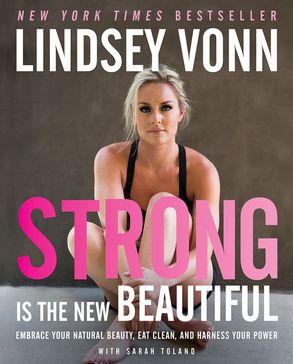
Image result for strong is the new beautiful

http://bleacherreport.com/articles/2015585-25-most-influential-women-in-sports 
Author: Sophia Adamski

Essay topic: Legal abortion for minors without parental consent


No Consent Required
You clutch the edge of the sink with your free hand as you watch that Clear-Blue-Easy, pee-on-a-stick thing turn a blushing cerulean. You’re seventeen. You’re still in high school. You’re trying to figure out what life is and isn’t. You’re too immature to be mature enough to be a parent; you can hardly keep your hamster alive. And what about college, standing over you, a dark, ever-widening shadow of student loans and majors?  You stare at the drain in the sink, trying not to throw up. Your head is spinning, and your heart is a wet, white-hot hammer, slamming against your ribcage. Abortion is your best option. However, you live in Colorado, a state that requires parental notification prior to obtaining an abortion. The nausea creeps up your throat like a snake and crouches in the back of your mouth like a tiger.
In 1973, the Supreme Court ruling of Roe v. Wade ensured that abortions are available to everybody in every state; however, many states fall short when regarding abortion for minors. Each state has different regulations regarding abortion laws for minors, especially with respect to parental consent. Due to varying state requirements, teens may find themselves traveling to another state that doesn’t require parental consent. Additionally, one may be fearful of discussing the situation with parents in the face of potential punishment. Another complication stems from the anxiety that a parent may not support their child’s choice and force them to carry to full term. By changing statutes to minor abortion and its associated parental consent laws, these adverse situations are avoided.
If a minor does not want to discuss their choice with their parents, they might opt to travel to another state to obtain an abortion in order to avoid the parental notifications required of their home state. “Deaths have occurred in some states as a result of women trying to circumvent the consent/notification law. Other women will attempt to go to a nearby state that does not have a consent or notification law; they would run the slight risk of complications during the trip home, when medical attention might not be conveniently accessible.” The overwhelming majority of states require parental consent for teenagers seeking an abortion, and some states require that you notify a parent or guardian 48 to 24 hours before you follow through with the procedure. According to Planned Parenthood, “...on the other hand, a judge can excuse you of this requirement,” called a judicial bypass. In Colorado, for example, the requirement for a teen abortion is that “one parent be told of the decision 48 hours before a minor’s abortion. A judge can excuse you from this requirement. If you do not live with your parents, but you live with a grandparent, or an adult aunt or uncle, the adult relative you live with may be told in place of your parents.” One neighboring state to Colorado, New Mexico, does not have any parental involvement required for a teen to have an abortion.
Another problem with parental consent laws is that a pregnant teen may fear retribution when telling a parent about their pregnancy. It may sound reasonable, daresay even hopeful, that a minor be comfortable with discussing a termination with their parents; however, this is not always the case. A minor may live in dread of even hinting at such a thing. Few have strong familial bonds that could withstand the stress of an abortion. According to the ACLU, “one study showed that 22% of teens who did not tell a parent about their abortion decision feared that, if they told their parents, they would be kicked out of the house. More than 8% feared that they would be physically abused because their parents had beaten them before. Of those who did not tell a parent, 12% did not live with either parent and 14% had parents who abused drugs or alcohol.” By mandating parental consent, the minor risks being thrown out of the home, or being beaten or otherwise physically assaulted by dysfunctional parents.
If state requirements necessitate a teen to notify or acquire the permission of a parent before obtaining an abortion, the parent may not support the child’s choice.  The parent may want to force the minor to bear the child. “Parents who are opposed to abortion might force their daughter to continue with the pregnancy against her wishes, even if remaining pregnant represents a significant risk to her health or life.” After being denied permission, a desperate alternative that the pregnant teen may choose is a back-alley abortion or self-inflicted abortion. Additionally, if permission is not granted, the teen may opt for a judicial bypass and hope to override their parents decision, potentially putting the parental relationship at risk.
Requiring parental consent impedes one’s right to privacy, a significant justification of Roe. v. Wade. The case “recognized that the constitutional right to privacy extends to a woman’s right to make her own personal medical decisions — including the decision to have an abortion without interference from politicians,”  did not cover all women; minor’s were not addressed and each state was left to decide on parental permission requirements. Clearly, there is interference when each state has different parental permission rules, some of which put barriers up and make it more complicated to terminate a pregnancy, ultimately compromising the constitutional right to privacy and the decision to have an abortion. To be fair and equitable from state to state, it would be beneficial to the minor to eliminate the requirement of parental permission or notification for a minor to obtain an abortion in all states.
The abridgement of minor’s rights in regard to abortion access plainly presents distinct problems. Every state has differing levels of consent laws for minors. Contradicting state laws often encourage those under eighteen to seek an abortion by crossing state lines. Opposing laws or lack of parental consent or involvement can also lead to illegal, self-inflicted, or back-alley abortions. Judicial bypass systems may place strain on family relationships, and, furthermore, can and does bring harm, inflicted by parents to children. All of these problems can be dodged with a single, elementary solution: Make abortions available to all minors, in all states, without the authorization of parents.  


Works Cited:
Parenthood, Planned. "Parental Consent and Notification Laws | Judicial Bypass." Parental Consent and Notification Laws | Judicial Bypass. N.p., 30 Aug. 2016. Web. 10 Nov. 2016. <https://www.plannedparenthood.org/learn/abortion/parental-consent-notification-laws>.
"U.S. Federal Bills Dealing with Interstate Travel of Pregnant Minors to Obtain Abortions."Abortion Laws Dealing with Interstate Travel of Minors. N.p., n.d. Web. 10 Nov. 2016. <http://www.religioustolerance.org/abo_stat.htm>.
@ACLU. "Laws Restricting Teenagers' Access to Abortion." American Civil Liberties Union. N.p., n.d. Web. 10 Nov. 2016. <https://www.aclu.org/other/laws-restricting-teenagers-access-abortion>.
@Debatewise. "Minors Should Be Able to Obtain Abortions without Parental Consent. - DebateWise." DebateWise. N.p., n.d. Web. 10 Nov. 2016. <http://debatewise.org/debates/2308-minors-should-be-able-to-obtain-abortions-without-parental-consent/#yes1>.
"Parental Consent and Notification Laws for Teen Abortions: Pro and Con." Parental Consent and Notification Laws for Teen Abortions: Pro and Con. N.p., n.d. Web. 10 Nov. 2016. <http://www.religioustolerance.org/abo_pare3.htm>.

@ppact. "Roe v. Wade." Roe v. Wade. N.p., n.d. Web. 10 Nov. 2016. <https://www.plannedparenthoodaction.org/issues/abortion/roe-v-wade>.